
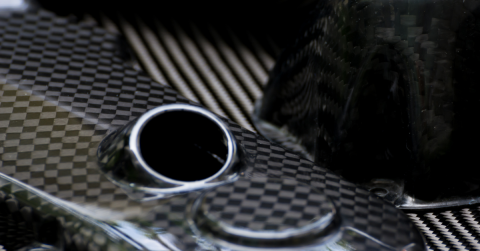
"TECNALIA is a reference laboratory in the structural characterisation of carbon fibre composite materials"
We offer advanced capabilities in testing and simulation of real material performance
TECNALIA is the reference laboratory in the structural characterisation, micrographic analysis of laminate structures and regulatory validation of carbon fibre composite materials, offering advanced testing and simulation capabilities that evaluate the real performance of the material with a high degree of precision.
The combination of high-capacity testing equipment; DSC, DMA techniques; porosity analysis; and multi-axis fatigue benches makes us a technology partner that is capable of generating engineering data that is traceable, reproducible and adapted to strict sectoral requirements.
We assess the structural integrity and validity of components.
The increasing use of CFRP (Carbon-Fibre Reinforced Polymers) in aeronautics, automotive, renewable energy, infrastructures and advanced mobility requires assessment methodologies that characterise not only the nominal properties of the material, but also its response to internal defectology, microstructural heterogeneity and degradation mechanisms in service.
- The most critical problems identified in these sectors include delamination due to interlaminar stresses, curing gradients, residual porosity, fibre volume variability, cumulative damage due to cyclic loads, impact sensitivity and alterations due to thermal-environmental ageing.
- These factors directly condition structural integrity and hence, the validity of the component for real operational requirements.
We detect deviations at an early stage and guarantee the reproducibility of the laminate
Conformity assessment requires the integration of standardised mechanical tests with high resolution thermal and materialographic analysis.
- Tensile, compression, bending, impact and fatigue tests provide essential parameters, such as directional elastic moduli, ultimate tensile strength, interlaminar resistance and S-N curves.
- In addition, thermal and microstructural techniques, such as DSC, TGA, DMA, optical and electron microscopy enable the degree of curing, porosity, fibre distribution and other critical indicators associated with the manufacturing process to be determined. This integrated characterisation is essential to detect deviations at an early stage and to ensure the reproducibility of the laminate.
We address the needs of the aeronautics, energy, automotive and railway sectors
Regulatory requirements vary according to the sector of application.
- In aeronautics, conformity assessment is based on standards, such as ASTM D3039, ASTM D7264, ASTM D6641, ISO 527, ISO 14125 or ISO 14126, along with other specific procedures derived from the industry's driving forces, such as AITM (Airbus) or BMS (Boeing), in addition to specific requirements NADCAP associated with testing processes and laboratories.
- In the renewable energy sector, the use of CFRP is less intensive compared with other composite materials, such as glass fibre. In addition to the ASTM and ISO standards, which are universal in all sectors, advanced methodologies to assess durability against hygrothermal cycles, UV radiation and thermal gradients can also be highlighted.
- In the automotive sector, within a context of structural lightweighting and crashworthiness, specific protocols defined by OEMs to assess the laminate response to impacts, multi-axial loading modes and compatibility with mass manufacturing processes stand out.
- Furthermore, TECNALIA has the capacity to adapt to the implementation of uncommon or non-standardised regulations or test protocols, as a result of its accumulated experience, the versatility of its test equipment and the multidisciplinary nature of its professionals. In rail transport and advanced infrastructures, in addition to the mechanical analysis of materials according to ISO and ASTM standards and procedures specific to the sector, the
We carry out fatigue analysis to ensure proper performance of the material
Finally, it is worth highlighting the importance of the fatigue analysis, based on standards such as ASTM D3479, in accordance with requests and responsibility of the material. This analysis is essential to guarantee appropriate performance under variable loads repeated over time.
Furthermore, structural numerical simulation and FEM analysis, and simulation of curing processes round off the experimental tests, enabling the performance of material to be predicted in scenarios that cannot be directly reproduced in the laboratory.