
Reverse engineering service
Accumulation of as much information as possible about the part by means of reality capture technologies and other material characterisation technologies: SEM, FTIR, DSC.
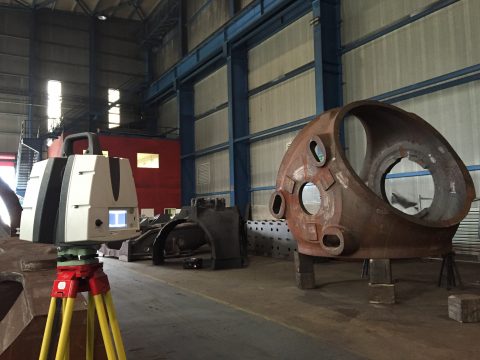
Geometric analysis is carried out by means of laser or structured white light scanning generating a 3D model with full information on its shape, to which material characteristics can be added.
3D models are generated in different formats depending on their use, among which the following stand out:
- Analysis of the performance of parts
- Manufacture of moulds
- 3D Printing
- Modification of existing designs.
- Digital and virtual factory simulation.
Material quality is identified by comparing the results obtained in the chemical analysis and in the mechanical tests with the standard applicable to the part being examined.
The manufacturing process is determined from a macro-microstructural study of the part. Our experience enables us to interpret results in order to identify the manufacturing process (forging/casting, heat treatment, coating, etc.).
Reverse engineering can be applied to any type of part.
- Replication of discontinued parts.
- Definition or modification of manufacturing specifications
- Trouble-shooting related to patents
- Development of components compatible with others of unknown characteristics
- Digital and virtual factory simulations.
Aimed at:
- Engineering Firms
- Architecture Studios
- Naval Sector
- Heritage and Archaeology
- Forensic Science
- Agents from the entire asset life-cycle: constructors, designers, maintenance and operations staff
Accreditations and Recognition
Laboratory certified in ISO 9001 and ISO 17025 (ENAC certification No. 4/LE063)
ENAC ILAC accreditation for the construction sector in compliance with ISO 17025, under file No. 4/LE024
ENAC ILAC accreditation for acoustics in compliance with ISO 17025, under file No. 4/LE456. Laboratory with certified management system in accordance with standard UNE-EN 9100:2010.
AIRBUS authorised Laboratory for surface treatments
Nadcap accreditation for chemical processes
Nadcap accreditation for material testing

Notified Body No. 1292 for the Construction Products Directive

Technical Assessment Body (TAB) for issuing European Technical Assessments (ETAs) for Construction Products.
Related brochure
Access our catalogs on scientific dissemination, products, services, and technologies. Our main goal is to transform scientific knowledge into innovation and technological solutions that create economic and social impact.