
Metallographic, environmental and fire testing of electronic components (PCBA systems)
Ensure the quality and reliability of your electronic components (PCBA) through quality control, environmental and fire safety tests, and boost your company’s competitiveness in the market.
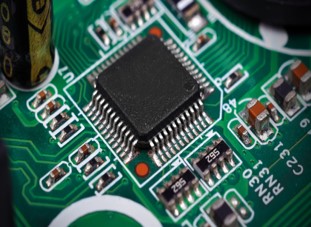
Zero defects, maximum reliability: the standard you should demand from your PCBA systems
TECNALIA has the equipment and expertise required to carry out tests and analyses aimed at ensuring the quality and reliability of electronic components (PCBA):
- Quality control tests: visual inspection in accordance with IPC-A-610, metallographic analysis of micro-sections of weld joints, analysis of whisker formation, electrochemical migration, measurement of mechanical deformation during assembly, and mechanical testing, among others.
- Environmental tests: combined temperature and humidity cycles, thermal shock tests, vibration tests, free-fall tests, impact tests…
- Fire tests: analysis of combustion behaviour to assess the fire performance of PCBAs
Metallographic analysis makes it possible to identify critical characteristics that cannot be detected using other techniques
Metallographic analysis using micro-sections is an essential tool for carrying out detailed inspections of micro-welds in PCBA systems. This makes it possible to to identify critical characteristics of the structures and quality of the welding process that cannot be detected using other techniques.
This type of analysis is useful for any sector, but it is compulsory in sectors such as the automotive, aeronautical, aerospace and defence industries.
It makes it possible to assess the quality of welds, by detecting cracks, pores and by evaluating contact angles, vertical fill, and wetting, and studying the conditions of intermetallic layers (thickness and its variations) in PCBA systems.
How do we carry out metallographic, environmental and fire tests on electronic components at TECNALIA?
Analysis of the formation of whiskers
Analysing whisker formation makes it possible to evaluate and control the growth of whiskers (length and density, among others) and non-whisker formations (dendritic structures) on printed circuit board assemblies (PCBA).
It also makes it possible to evaluate and monitor different surface finishes and ageing conditions of electronic components, e.g. the presence of SnPb, free Pb and Sn.
The work is carried out by:
- Carry out inspections, in accordance with specific standards.
- Selecting the thermal ageing conditions.
- Visually inspecting components at different stages of ageing.
- Inspecting the surface of components using SEM and EDX techniques.
Testing crimped or pressed connectors
- Tensile test as per EN IEC 61238-1-1: 2020, EN 60352-1/A1: 1998 or ECSS-Q-ST-70-26C, among others.
- Metallographic testing in accordance with ECSS-Q-ST-70-26C.
Environmental tests
Environmental tests make it possible to replicate the potential environmental conditions to which a component may be subjected during its service life in an accelerated manner.
Carrying out these environmental tests allows us to anticipate potential problems and resolve them before the product goes into mass production.
These tests simulate the factors that can have the greatest impact on components, such as climate (temperature cycles, humidity cycles, combination of both) and transport (vibration, impact, and free fall)
Fire tests
Products transported by rail must comply with the requirements of EN 45545-2, based on risk levels (HL1, HL2 or HL3) depending on the vehicle’s operation. PCB boards or integrated circuits installed in vehicles are covered by the EN 45545-2 standard, and requirement R24 applies to them. Requirement R24 stipulates that tests must be carried out in accordance with EN ISO 4589, which specifies the minimum lower oxygen limit (LOI) for each risk level.
TECNALIA has the infrastructure and expertise required to carry out these tests and ensure the quality and reliability of your electronic components.
Who we can help
- Circuit manufacturers and designers
- Companies in the aeronatics sector
- Companies in the automotive industry
- Companies in the telecommunications sector
- Consumer electronics manufacturers
Registration
ENAC ILAC accreditation for the materials sector in compliance with ISO 17025, under file No. 4/LE063

AIRBUS authorised laboratory for control testing of surface treatment plating and metallic materials.
Nadcap accreditation for chemical processes
Nadcap accreditation for materials testing
Our Catalogs
Access our catalogs on scientific dissemination, products, services, and technologies. Our main goal is to transform scientific knowledge into innovation and technological solutions that create economic and social impact.